
If you’ve ever asked yourself “Am I walking my dog enough?” you’re not alone! Exercise is one of the biggest factors in keeping our pups happy and healthy, but the “right” amount depends on their age, breed, and energy levels plus their individual quirks.
Here’s a simple guide to help you towards figuring out how much activity your dog really needs. I’ll pop a few links to things that can be super useful, some will be affiliate links which means that if you click through and make a purchase then I may earn a small commission at no extra cost to you.
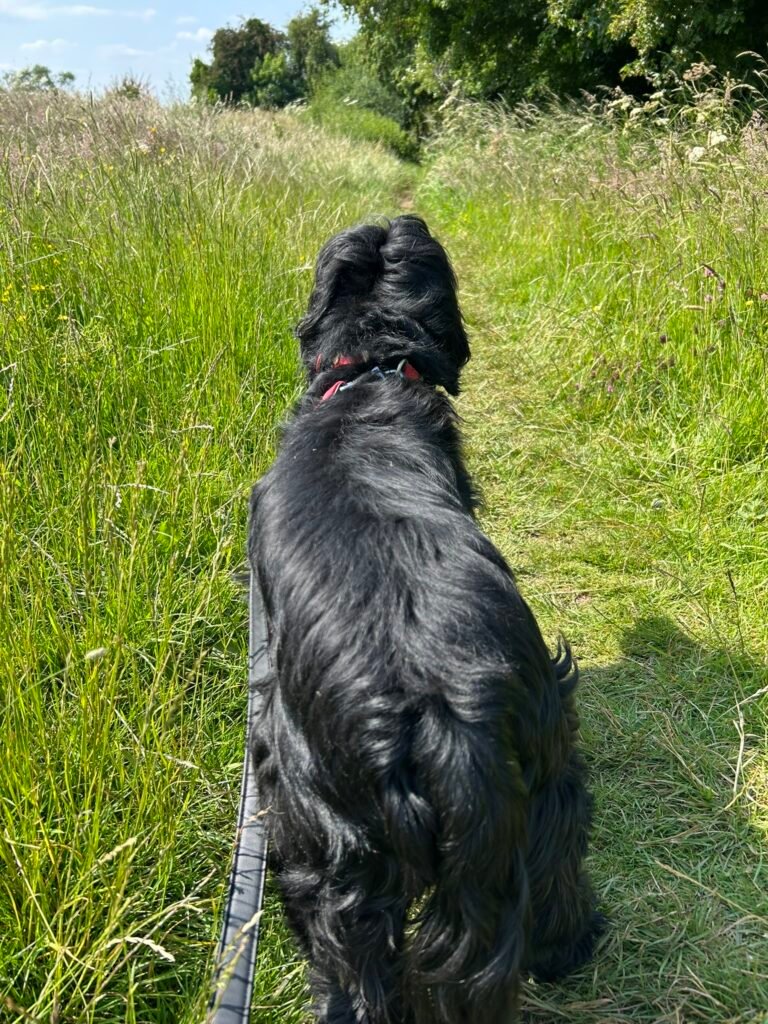
🐶 Puppies (Up to 12 Months)
- Rule of thumb: 5 minutes of exercise per month of age, twice a day.
- Example: a 6-month-old puppy = 30 minutes twice a day.
- Puppies tire quickly but also need play to burn off energy.
- Mix short walks with safe playtime (like fetch in the garden).
- Remember that EVERYTHING is new to a pup and mental exercise tires them out as much as physical so just doing training and playing with toys will tire them out too
⚠️ Too much exercise too young can affect growing joints – better to do little and often.
🐕 Adult Dogs (1–7 Years)
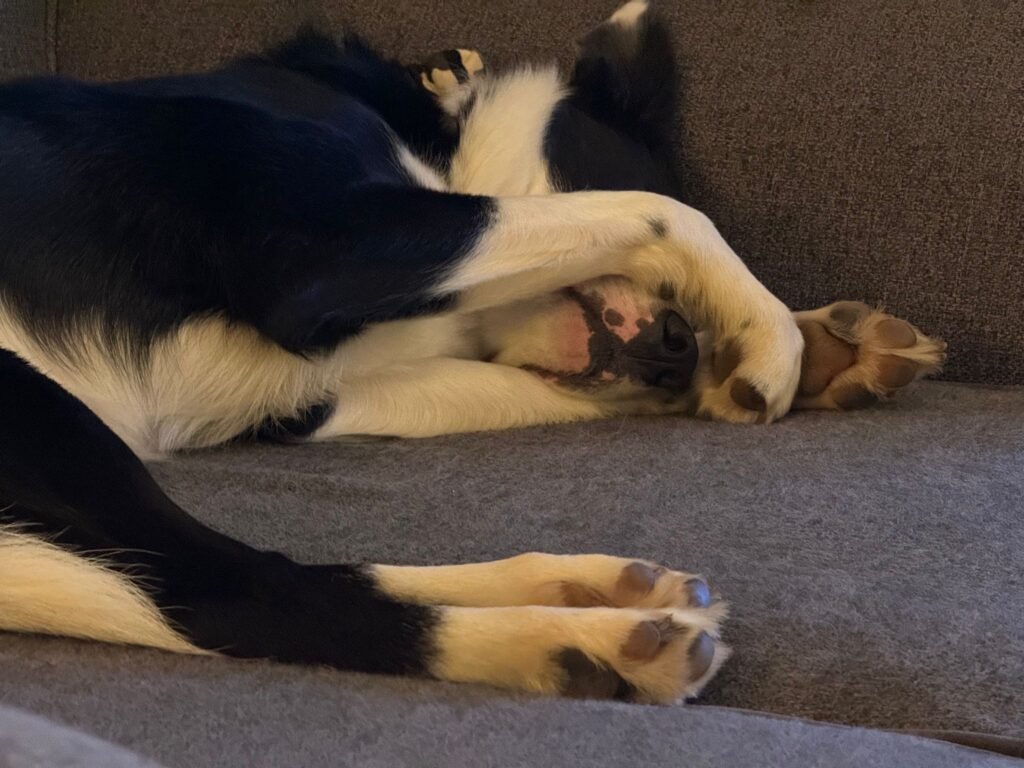
This is where breed plays the biggest role but I’m going to put a caveat in here! If you’re researching what dog to get then of course, if you’re getting a Border Collie then be prepared for a high energy dog with a lot of exercise needs… however… listen to your dog! We work from home the vast majority of the time so Joey almost always has company and if he gets a walk for 30 minutes plus normal interactions throughout the day then he’s all good, he even goes for a hefty 2 hour nap after his walk (see the pic below for some cuteness!). Dogs are individuals as much as people are. Just to note that he’s a fit and muscular boy so is definitely getting what he needs!
- High-energy breeds (Border Collies, Huskies, Pointers): 1.5–2 hours per day.
- Moderate-energy breeds (Spaniels, Retrievers, Terriers): 1–1.5 hours per day.
- Low-energy breeds (Basset Hounds, Bulldogs, Shih Tzus): 30–60 minutes per day.
👉 Don’t forget mental stimulation – training, sniffing games, or puzzle toys count as “exercise” too!
🐾 Senior Dogs (7+ Years)
- Energy levels drop, but regular movement is still vital and it’s great for their enjoyment of life.
- 30–45 minutes a day, broken into shorter, gentler walks.
- Swimming or slow sniff walks are great low impact options.
⚠️ Always keep an eye out for stiffness or limping – adjust walks if your older dog struggles and don’t lose sleep if they don’t have a walk every day. Things like snuffle mats can be great to give them some gentle pleasure.
🧠 Why Exercise Matters (Beyond Just Burning Energy)
Prevents obesity and related health problems.
Reduces behavioural issues (chewing, barking, digging).
Builds confidence in nervous dogs.
Strengthens the bond between you and your pup ❤️.
🦴 Quick Tips for Busy Owners
Try “sniffari” walks (slower walks where dogs lead with their noses) – my 2 love this, especially Charlie.
Short on time? 10 minutes of hide and seek with treats can tire them out mentally. We take them out of the room and then the other hides little tiny puppy training treats all round the room, Charlie is a whizz whereas Joey is just too slow so often gets his own sympathy session after so that he can get a couple of treats!
Dog walkers/daycare can be a lifesaver if your schedule is hectic.
Final Thoughts
Every dog is unique – the right amount of exercise depends on breed, age, and personality. My two absolutely love their daily walks but I’ve found even a quick sniff session in the park does wonders for their mood.
✨ The key? A balance of physical and mental activity. Tired dogs are happy dogs… and happy dogs make happy owners.
So – how much exercise does your dog need to be their happiest self?
Back to Blog